All About Marie

Animal Files columnist of the Orange County Register from 1992-2016; Emmy Award winning producer of Educational Television Programming; Host of "The Pet Place Radio Show" heard world-wide at www.blogtalkradio.com/petplace; click the player below to listen. Producer/Director/Editor/Co-host of "The Pet Place TV Show" during the 19 years it ran on KDOC TV in Los Angeles and Orange Counties; Wife, Mother of five kids, Grandmother of two baby boys and one baby girl, and pet parent of two cats, one dog, many fish, and a cockatoo.

Listen To The Pet Place Radio Show with Marie Hulett

Tuesday, February 11, 2014

Changing a Life for the Better Through Volunteer Work


Dear Marie,

I’ve enjoyed reading your articles and I thought I would write to thank you, plus I have plenty time to write.  I am currently in County Jail for drug possession.  This has been a wakeup call for me and I am really working to turn my life around.  I’m getting out next month and I would really like to adopt a dog.  More than that, I would really like to volunteer my time in some way to help dogs.  My motivation is – one, I love dogs, and two I think it would be beneficial to my recovery.  I was just wondering if you could point me in the right direction of where to adopt, where to volunteer, and ballpark price.  Thank you for your time to read my letter.

Garett

Dear Garett,

Thank you for the nice letter.  It sounds like you are on the right track to getting your life back in order and I wish you the best of luck in recovery once you are released.

Volunteering at an animal shelter would be fabulous.  There are many shelters and rescue groups throughout Orange County that can always use a hand.  Check out www.volunteermatch.org and type "animals" in the search box.  You'll get quite a few results from this search and one is sure to be perfect for you. This is a great resource for anyone interested in volunteering for almost any cause.

My advice to you would be to also check out as many shelters and rescues as possible to see which one feels right to you.  Some shelters or rescues may have policies that make volunteering less than fulfilling by greatly limiting what you can and cannot do.  Others would love to have all the help they can get and will have you (and need you) working all the time which may be more than what you are ready for.  Too many volunteers get burned out or overwhelmed quickly, and then quit within a short amount of time.  Don’t put yourself in this position.

I truly believe that working with animals helps people heal.  There are many jails across the country that pair inmates with shelter dogs in very specialized volunteer programs.  The inmates train “problem dogs” and give those animals a chance at having a new life in a new home.  In most cases, the people who have participated in this program leave their respective institutions as individuals who are truly ready to turn over a new leaf and continue volunteering within their communities.  Everyone involved benefits.  There is something beyond words that happens when a human being is able to connect with an animal and care for it, and you obviously recognize this. You are on the right path.

As far as adopting a pet, I would recommend waiting until you are back on your feet.  Also, by taking your time, you can get to know a lot of dogs at the shelter or rescue where you decide to volunteer.  You’ll no doubt fall in love with one of them – that’s one of the hazards of working with animals—you end up wanting to take a bunch home!  But one of them will definitely get to you and that’s the one you should adopt.

Adoption fees vary from organization to organization.  County and City facilities usually have the lowest adoption fees and even offer special adoption days during the year where the fees are greatly reduced or completely eliminated.  Rescue organizations tend to be more expensive since they do not have public money to help support their cause.  So you can expect to pay anywhere from $50-500 for a dog, depending on its age.  That price generally includes spaying or neutering, vaccinations, microchipping, and a vet visit with a participating veterinarian after you bring your new pet home.  Sometimes adoption fees are reduced or waived for volunteers.  That may be one thing you should look into when making your decision about where you want to donate your time.  Thanks for writing and I wish you the very best.

Sunday, February 9, 2014

Put Your Pets In Your Disaster Preparedness Plan!

Dear  Marie:

I've been thinking a lot lately about earthquake preparedness and realized that I haven’t really planned anything for my dog.  If “the big one” happens while I am at work, I might not be able to get back home to take care of him.  Do you have any suggestions?

Dori, Fullerton

Dear Dori:

What a great question!  Planning for a disaster, such as an earthquake, is such an important issue.  Many people have taken the time to create earthquake kits and design  special disaster plans; but what is surprising is that people often forget to include the family pet in those plans.

If a major earthquake (or fire, or any other emergency) occurs in our area, there is a high likelihood that you will not be able to travel on roads and freeways leading back to your house.  If you work far from home, your beloved pet will be helpless unless you have planned ahead.  There are a number of steps you must take now to ensure the safety of your four-legged family members in the event of a disaster. 

First, talk to your neighbors and agree to care for each other’s pets if anyone gets stranded far from home.  If you have retired neighbors or “stay at home” moms /dads nearby, talk to them.  Chances are, they will be home when you are not and can provide care for your furry friend.   (Make sure you socialize your pet so that it will feel comfortable around your neighbors.  No one will want to care for your dog if it tries to attack them!)

Keep a t  least a three day supply of food and water on hand for your pet.  I recommend that you store a couple of non-spillable dishes in the same location with the food and water.  Also, assemble a pet first aid kit that should include the phone number of your veterinarian, antiseptic cream, bandages, and any prescription medication, complete with instructions for use.   It’s a good idea to store blankets, towels, and newspapers for your pet’s warmth and hygiene.  These items can be placed in back pack next to a pet crate (which may need to double as your pet’s housing if your home sustains structural damage).  The best portable pet crates are the strong plastic variety used for transporting pets by plane.  They can withstand the impact of falling rubble and are quite durable.  They also come in a number of different sizes.

Make sure your pet is always wearing an ID tag that has both your cell phone number AND the phone number of an out of the area friend or relative in case local phone service goes down.  If he gets loose after a disaster, animal control officers will be able to contact you or your designated out of town person and arrange to re-unite your pet with your family or neighbors as soon as possible.  In addition to a tag, get a microchip for your pet.  You can link all kinds of information to your pet's microchip so it is a HUGE resource.

Other items to consider are leashes, harnesses, and muzzles.  Any injured or frightened animal will bite.  Store a muzzle with your emergency supplies in case your neighbors need to use it.  A leash and harness will also come in very handy for safely moving your pet to another location. 

Finally, keep  a copy of your pet’s vaccination record with all your other supplies.  Officials may need  to verify that he is up to date.  If you discover that your pet  has missed getting some important shots, get him to the vet immediately.  During an emergency, your pet may come into contact with animals that carry diseases.  If he is current on all his vaccinations, he will be protected.


These simple precautions may someday save the life of your pet.  Take the time now to put your non-human emergency plan in play.

Friday, February 7, 2014

Cats are NOT allowed to roam...it's the LAW!

Dear  Marie:
Help!  My problem is neighborhood cats.  One has broken my bird feeder.  Is there nothing to keep them away?  Repellent sprays are very expensive and no guarantee.  It’s not fair that dogs must be kept in their yards, indoors, or on a leash and cats get free run of the neighborhood.  I don’t dislike cats...but I like my wild bird friends better!  Too, I’m the only one in the neighborhood with soft dirt in my garden - so guess what happens?

Thank you for any suggestions,
Leona, Orange

Dear Leona:
First, let me say that cats are my favorite animals.  I have three little guys myself and I love them dearly.  But because they mean so much to me, I certainly do not let them roam the neighborhood where they could be exposed to great dangers and create bad feelings with my neighbors.  I do not understand cat owners who insist on making excuses about why their cats “need” to be “indoor/outdoor” pets...or worse yet - strictly outdoor animals.

What most people do not realize is that it is actually against the law to let cats roam onto the property of another...just as it is with dogs.  You, as a property owner or renter have the right NOT to have cats at your home or in your yard.  Therefore, I recommend that you speak to the owners of the problem cats and let them know about the nuisances and damage their pets are creating.   Try and do this in as friendly a way as possible, letting them know that you are genuinely concerned for their cats’ safety when they (the cats) are roaming freely. I know this is difficult to do, and it may create hard feelings. But THEIR actions are creating hard feelings (that they are blissfully unaware of)...so you need to open the door to communication.

If this does not work, or if you do not know who the owners are, contact your local animal control authority.  Each agency is different, so you will need to find out what its policy is on stray cats.  Most agencies will pick up stray cats from your property, provided they are in a box or other suitable container that can be used to transport the animals safely to the animal shelter.  Furnish the agency representative who impounds the cat with all owner information if you know it.  The shelter staff will contact the owners and  have them pick up their pet.  The owners will have to pay impound fees which usually is enough incentive to ensure the animal is not allowed to run loose again.   If no owner is located, the cat may be placed up for adoption in a new home with new owners who will take proper care of their pet. 

I am completely inflexible about what proper care is when it comes to cats.  There is NO excuse to let them run loose.  Cats that roam neighborhoods are routinely killed by cars, even on secluded residential streets.  They are taken as prey by coyotes and other predators.  They are exposed to viral diseases that are often lethal.  They are attacked by other loose cats and dogs.  They can fall into the hands of abusers or people involved with the illegal roundup of straying pets for use in laboratory experimentation.  If they are unaltered, they contribute to the staggering number of unwanted pets that are killed in shelters. The list of dangers goes on and on.  If a pet owner can’t protect his or her pets and give them adequate care, then perhaps he or she should just stick to keeping stuffed animals!

Thursday, February 6, 2014

Skunks, Raccoons, and Opossums...oh my!

Dear Marie:

Lately, I have been finding small holes dug out in my front yard, combined with what appears to be animal droppings in the damaged area.  I have not seen any animals in the yard, but I am reasonably certain that some small animal is responsible for the holes.  I live in a part of the city that is surrounded by busy streets and buildings.  Therefore, I cannot imagine a wild animal being in this area, other than a gopher or a rat; but I did not think they created this type of damage.  Can you advise me about what this animal might be and what I can do to discourage its “activities”
in my yard?

Puzzled in Orange

Dear Puzzled:

The “yard problem” you are experiencing is not at all uncommon.   In fact, many Orange County residents, especially those with lush lawns, have described similar difficulties with local wildlife. 

You are also not alone in mistakenly believing that wild animals, other than the small mammals you mentioned, live far away from the hustle and bustle of urban communities.  But in actuality, our cities are teaming with wildlife, from coyotes, to snakes, to skunks.  The latter is a potential suspect for the holes in your lawn.

Skunks, along with opossums and raccoons, will scout out neighborhoods in search of thick lawns and the moist soil underneath.  These very intelligent and adaptable animals are searching for the small grub worms and other insects that live at or under the root level of the grass or other ground cover you may have.  Normally, they make coin sized holes about an inch or two deep.  The holes can be spaced relatively close together, or far apart, depending on what the animals find. 

The solution is relatively simple.  Eliminate the food source.  Natural, non-toxic pesticides may be used throughout your yard to kill the insects in the soil.  Talk to nursery staff to find out what product would meet your needs. 

After using the pesticide, it might take a few days to notice the effects.  Since the animals realize there is no more food available at your home, they will move on.  Remember, you must continue lawn and garden pest control from this point forward, otherwise a new family of “diggers” will begin the cycle again. 

Unfortunately, many homeowners in your predicament will resort to trapping the opportunistic animals.  I have heard stories from some disheartened residents who have paid private trappers upwards of $100.00 for each animal trapped on their property, and they still have nuisance animals roaming about after the final bill has been paid.

The reason for this is simple.  Animals seek out homes with ample food, water, and shelter.  If the animal is removed but the environment remains the same, an attractive niche is available to any other animal that discovers it.  In most cases, other animals are aware of the occupied niche and are more than ready to move in if the current resident animal suddenly “disappears.”

It is important to note that insects may not be the only food source an animal might be interested in.  Pet food left outside, accessible trash, fallen fruit, and homegrown vegetables also provide skunks and other animals with the sustenance they require.  If all unnatural food sources contained in residential areas are eliminated, wildlife “problems” are greatly reduced.   Sometimes, this takes a neighborhood effort.  Be creative...invite your neighbors over to discuss skunks!  You’ll be surprised at the terrific brainstorming that can take place by working together.   Good Luck!


Wednesday, February 5, 2014

Swallows are a little early this year....


Dear Marie,

I don’t live anywhere close to San Juan Capistrano, but for some reason, swallows have invaded my neighborhood.  I have at least a dozen nests under my eaves and so do most of my neighbors.  The birds are noisy, aggressive, very messy and I just don’t want them around.  I can’t even park my car in my own driveway because of the bird droppings.  I don’t want to hurt the swallows;  I just think they belong in a more wild setting.  What can I do?

Steven, Lake Forest

Dear Steven:

Usually, from March to June, many California  residents experience the same problems you have described. So your little guys are "early-birds!" During the late winter, Cliff Swallows, migrate northward from South America—where they pass the cold-weather-months—and some actually travel all the way up to Northern California.  San Juan Capistrano is famous for the swallows, that is true, but every city on their migratory path is subject to nesting colonies. 

Cliff swallows provide us with a wonderful, non-toxic pest control service.  They keep mosquitoes and other flying insect populations  in check.  If it wasn’t for the swallows, and other migratory birds, we would have far more serious problems to complain about.

Cliff swallows build gourd-shaped nests out of mud.  Any vertical surface that meets an overhang is ideal for nest building activities.  Before there were  man-made structures in the swallows’ migratory path, nest sites consisted of cliffs and canyon walls.  However, in the present day, homes and office buildings introduce ideal surfaces for the durable mud nests and are irresistible to site seeking swallows. 

It takes up to two weeks for a pair of swallows to complete their nest.  They each travel up to a half mile in search of mud to complete their home.  The pair will make more than a thousand trips to the mud source to gather enough building material.  It is no easy task.  If you have children, this is a wonderful opportunity for them to observe some of the magic of nature.  Nest-building activities are truly awesome.

When the nest is nearly completed, the female will begin to lay her eggs.  On average, a female swallow will lay one egg a day for three to four days, usually in late April or May. (Obviously, in your situation, this whole time frame has moved up dramatically!)  Both male and female will sit on the eggs until they hatch in just over two weeks.  

Let me assure you, the nuisances you are experiencing are strictly temporary.  A month after the babies hatch, the whole family will disappear.  May I suggest parking your car in a different spot for the time being.  Hose down any messy areas on the ground each evening, when the birds are less likely to “dive bomb.”  Determine what the comfort zone is for the parents and give them their space.  If you choose not to, (at your own "risk!") defensive behaviors on the part of the birds are normal and should be expected. 

Swallows—as well as all migratory birds—are protected under Federal Law.  It is strictly prohibited to remove their nests once they have been constructed.  Fines of several hundred dollars PER NEST REMOVED can be imposed by U.S. Fish and Wildlife authorities on any individual who violates this code.  However, once the nest is abandoned, they may be hosed down.

Swallows and their offspring return to the same nesting location year after year.  If you do not want swallows returning next year, I suggest using an exclusionary control method to discourage nest building under your eaves.  The simplest method is to attach nylon netting around the perimeter of your house from the eaves to the wall during nesting season.  This eliminates a suitable surface for the swallows to attach their nests.


Be patient...enjoy your guests.  You’ll miss them when they’re gone!

Tuesday, February 4, 2014

Traveling with a Pet in the Hot Summer - Not a Good Idea!


Dear  Marie:
I’m planning a family summer vacation that includes our dog.  We’re going to be driving to the Grand Canyon and sight seeing along the way.  We will be tent camping and the total length of the trip will be two weeks.  Can you suggest some tips that will make this trip enjoyable for our pet? 

Jolene
Huntington Beach

Dear Jolene:
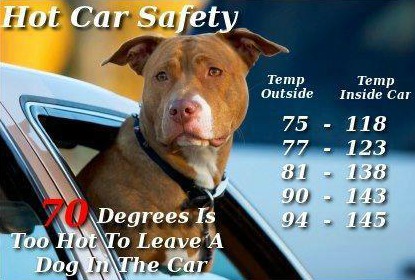
First of all, I’d like to try and talk you out of taking your dog.  Your summer vacation to the Grand Canyon will be both uncomfortable, and potentially dangerous for your pet.  Summer-time temperatures out in your destination area are well over 100 degrees.  I am sure you are aware that heat, dogs, and cars don’t mix.  For example, if you leave your pet in your vehicle while you get a “quick” bite to eat at a highway diner, the temperature inside your car will sore to an unbearable high in just a matter of minutes; even with the windows partially rolled down, your pet will succumb to heat stroke before you finish your ice-cold drink and a burger in the air-conditioned building.   All too often, pets are killed in situations just like this. 

Secondly, your pet may become confused if taken away from his home environment.  His only security will be his family.  But, you’ll be out walking the “no dogs allowed” trails of the Grand Canyon, and he will have to stay behind in camp.  Often, pets escape and run away in an attempt to find home.  The chances of him being located again are not incredibly good.  Even if he is wearing an I.D. tag or has a microchip, there are miles and miles of open space and he would be—almost certain—un-findable. 

Open space brings up another important issue...wild animals.  Coyotes, mountain lions, and other predators are indigenous to the Grand Canyon area.  A domestic dog would certainly be looked on as prey by these animals.  Furthermore, rattlesnakes are prevalent.  A curious dog could easily fall victim to a poisonous viper and veterinary help would be hard to come by, especially the immediate, emergency form of veterinary care required for this type of injury.

Hopefully, I’ve discouraged you.  Generally, I support travelling with a pet during cooler times of the year, and to more temperate locations that are pet-friendly.  The Grand Canyon is NOT one of those locations. 

So now you need to know what to do with your pet while you’re gone.  Ask a neighbor or a family member to care for him.  If you can’t think of anyone offhand, there are a number of pet-sitting services that will provide wonderful care for your little guy while you are vacationing.  Furthermore, pet-sitters will take care of your house, and plants, and a number of other chores that need to be tended to.

Another option—though not the most desirable—is boarding your pet.  Your veterinarian may have facilities, or you may choose a licensed boarding kennel.  However, if you choose this option, your pet will suffer both the separation anxiety of losing his family AND his familiar home surroundings.  I’d go with the home care!


Your pet WILL miss you while you are away.  But unlike you, he doesn’t really have a sense of time. Chances are, the hours you spend away while you are at work elicit the same emotional response he will experience while you are away on your trip.  Nevertheless, if he is allowed to remain at home, he will know that you are coming back and will be faithfully waiting to smother you with doggie kisses when you return.

Monday, February 3, 2014

Adopting a Pet Bunny

Dear  Marie:

My thirteen year old daughter has been begging me since her last birthday to have a pet rabbit.  I've been trying to encourage her to consider a dog or a cat.  I don’t know anything about rabbits, and I've heard so many stories about people who have adopted one or two, only to have them die within the first year or two.  My daughter assures me that she will take care of it, but I’m sure she doesn't know the first thing about rabbit care either.  Should I go ahead and get a rabbit for her anyway?

Elizabeth, Los Alamitos

Dear Elizabeth:

Before you adopt any pet, it is always necessary to research and prepare.  All pets, no matter what kind, are huge responsibilities.  Make sure your daughter understands that animals are living, breathing, feeling beings - not toys - that must be fed, cleaned up after, loved and cared for...each and every day, for years!  Is she ready to take on that responsibility?  As her mother, you know best. 

Spend a day at the library.  Check out books on rabbits and their care.   Find out what veterinarians in your area provide bunny-care.  When you’ve found one you like, find out the costs associated with preventative veterinary care.  Your pet rabbit should be spayed or neutered to help it live a long healthy life and to prevent some bad habits such as marking territory.  Will you be paying for these procedures or will your daughter have to earn her own money to pay.  Again, this is something you should discuss before adopting. 

After you've made the big step and brought a bunny home, please make it a house pet.  So many people adopt rabbits and send them to a life in a lonely hutch out in the back yard or along the side of a house.  Rabbits love affection and to be with their family.  They make excellent indoor pets.  Most people don’t realize this because all they have ever seen are rabbits in cages.  A caged animal never has the opportunity to grow, emotionally, and develop its full personality. 

There are some precautions to take with a house rabbit.  First, make sure that all electrical cords are out of reach or covered.  Rabbits like to chew.  If they gnaw on a power cord, it can be deadly.  Provide your rabbit with chew toys and other distractions to keep him from chewing furniture, rugs and other items.  You may want to make a special bunny room that you isolate with the same special gates used to keep toddlers in safe areas of the house.  The bunny room should be checked for all possible hazards and bunny-proofed.

You will also want to house-train your new pet.  Believe it or not, rabbits can be taught to use a litter box.  There are a number of different methods for accomplishing this task.  You might consider checking out the House Rabbit Society website at  http://rabbit.org/ for detailed information on this topic and many other indoor bunny issues.