All About Marie

Animal Files columnist of the Orange County Register from 1992-2016; Emmy Award winning producer of Educational Television Programming; Host of "The Pet Place Radio Show" heard world-wide at www.blogtalkradio.com/petplace; click the player below to listen. Producer/Director/Editor/Co-host of "The Pet Place TV Show" during the 19 years it ran on KDOC TV in Los Angeles and Orange Counties; Wife, Mother of five kids, Grandmother of two baby boys and one baby girl, and pet parent of two cats, one dog, many fish, and a cockatoo.

Listen To The Pet Place Radio Show with Marie Hulett

Tuesday, January 28, 2014

Ducks in Swimming Pool

Dear Marie:
Each year, for the last four years, we have been very fortunate to have had our pool selected by a pair of mallard ducks that thought it was the ideal place to raise a family.  We’ve taken video tapes and pictures and have had a lot of laughs watching them.  But this year, we are hoping they don’t come back.  We have new neighbors that keep three outdoor cats that are very proficient hunters.  If the ducks return, I am certain all the babies will be killed.  What can we do to discourage the ducks this year?

Jessica, Fountain Valley

Dear Jessica:
You have brought up a very timely issue.  It will not be long before many homeowners with pools  begin noticing unexpected guests!  Mallard ducks, in particular, seem to be the critters that consider city pools too good to resist.  However, most residents just “plain don’t like ‘em” and want them removed.  They feel that the water fowl contaminate the pool and are a nuisance. 

Yet, most pool filters have no trouble keeping duck inhabited pool water clean.  Furthermore, patios can be hosed down daily to keep up their appearances.  For many, this is just an inconvenience and too much work that they can do without.  Nevertheless, it is important to note that once a pair of ducks has prepared a nest, neither it, nor they, can be removed or disturbed.  The Federal Migratory Bird Act prohibits this and huge fines may be imposed for violations. 

However, there is nothing that prohibits a homeowner from taking measures before nest-building occurs, which is what you are interested in and also what all pool owners should do if they don’t want these wild guests. 

First, begin covering your pool with a solar cover at all times when not in use.  If you are already too late for this, i.e., the ducks have already landed, invest in a dozen or so giant beach balls.  Inflate them and let them roll around in the pool.  This will make the ducks very uncomfortable and they will think twice about building a nest in your back yard.  Under no circumstances should you offer the ducks any food.  Remove any pet food dishes that may be outside.  Thin out dense landscaping so that the ducks have no hiding places to build their nest. 

If you still have no luck and it is apparent that the ducks are staying, talk to your neighbors about keeping their cats indoors after the babies have hatched.  It will only be for a few weeks and then the whole duck family will suddenly disappear to begin a new phase in their life cycles.  (And who knows, maybe your neighbors will continue keeping their cats indoors to boot!)


Monday, January 27, 2014

Are Ferrets Illegal?

Dear  Marie:
I have always been interested in ferrets and have been considering adopting one; however, I have been told that they are illegal to own in California.  Is this true?  If so, why?
Paula, Huntington Beach


Dear Paula,
As a Native Californian, I feel almost embarrassed that my state is so misinformed and misguided when it comes to ferrets...yes, it is true; ferrets are illegal in California.  There are a number of reasons for this...all of them unfounded.   But fear, lack of knowledge, and old wives’ tales keep our elected officials from legalizing an animal that has been domesticated longer than the house cat.  (Please note:  Hawaii is the only other state that prohibits ferrets.)

Way back in California’s history, there were a number of poultry farms.  It was commonly believed that if domesticated ferrets escaped, they would form wild colonies and devastate the poultry industry.  The prevailing wisdom regarding the animal was that it had an insatiable appetite for eggs and chicks and that it would have no problem searching for and discovering poultry ranches.

When the chicken farms were replaced by housing tracts and shopping malls, the laws regarding pet ferrets were not changed.  What did change was the  new “potential victim” of the vilified ferret: endangered and threatened indigenous birds.   Again, it was believed that wild ferret populations would seek out nests and devour eggs on a quest to satisfy their rumored insatiable appetite. 

In depth research has demonstrated that pet ferrets, being domesticated animals, cannot survive more than a short time in the wild.  Several recent U.S. surveys have shown conclusively that there are no feral colonies in any state.  This information has been supplied to lawmakers time and time again in the hopes of legalizing ferrets.  Unfortunately, another unfounded charge enters the picture...aggression. 

According to public myth, ferrets will attack babies and small children.  The fact of the matter is that ferrets make safer pets than dogs.  Statistically, dogs are over 200 times more likely to bite than ferrets.   But the bottom line when it comes to children and pets...any pet...is that parental supervision is an absolute requirement. 

You might think that the argument against maintaining ferrets would end there.  It doesn’t.  Another unsupported claim is that ferrets will spread rabies.  To date, there have been no human rabies cases resulting from contact with an infected ferret.  Additionally, an approved rabies vaccine for pet ferrets has been available since 1990.  The vaccine meets all the licensing requirements of the U.S.D.A.

So, why are ferrets illegal?  Well, despite all the evidence presented to lawmakers, old fears are hard to lose.   As a result, many otherwise law-abiding, ferret-loving Californians are “law breakers.”   If you are interested in helping to change current California Law regarding ferrets, may I suggest contacting the Ferrets Anonymous at http://www.ferretsanonymous.com/archives/legal/misrepresentation.html.  They can advise you about how to begin a letter writing campaign and how to contact you state representatives.

Sunday, January 26, 2014

Dealing with the Death of a Beloved Pet

Dear Marie:

Last month, after making a very painful decision, I had my wonderful friend, “Annie”, a miniature poodle,  put to sleep.  She was fifteen years old and had been losing a long, difficult fight to cancer.  I could not allow her to continue suffering, nor could I watch her lose her remaining dignity.  I was with her in the veterinarian’s office as she was  put down and I cried like a baby when  I saw her breathe her last breath.  Now, almost one month later, I feel as though I still not have been able to deal the loss.  Every time I think of her, I cry.  My friends and my family don’t really understand.  They say things like, “She’s just a dog.  Get another one!”  Well, to me, she wasn't just a dog.  She was part of my family and had been my best friend since I was nine years old.  Am I over reacting?  How am I supposed to forget her?

Janice,
Tustin

Dear Janice,

You are NOT over reacting.  For many people, myself included, pets are definitely part of the family and the loss of a pet is as difficult as the loss of any loved one.  Unfortunately, the reactions you’re getting from family and friends are typical.  They think they are trying to help you by downplaying the significance of Annie in your life, when in fact, they should be offering you support and acknowledging her importance.

Annie played a vital role in your life.  She was with you since you were in grade school. Her loss may symbolize the loss of your childhood and bring to the foreground all the changes occurring in your life.  Take time to think about all the changes, how Annie fit in, and how she may have helped you  get through those changes.

Perhaps, you are feeling some guilt too.  Maybe, as you grew older, you think did not spend as much time with Annie as you feel you should have.   You're probably just being too hard on yourself.  Annie loved her life with you.  Pets never judge their people harshly.  They live in the moment and her moments with you were no doubt wonderful.

Take some time to make your peace with Annie.  Even though she is gone, say “Good-bye”  in your own way.  The Animal Health Foundation of Southern California suggests that pet owners who are suffering from pet loss should hold one of their pet’s favorite toys or look at photos to make this important “farewell.” 

Your choice to euthanize Annie was a difficult one.   Annie did not want to suffer.  You relieved her of her pain and suffering.  You had the courage to make the responsible and loving decision. 

It is important, now, to remember Annie in a special way.  Have your family or friends join you an informal memorial service.  Talk about your favorite memories - make a donation or volunteer time to an animal welfare organization in Annie’s name - you can even create a permanent place to remember Annie in a virtual pet cemetery (http://www.virtualpetcemetery.org/pet/index.html).  But most important, know that in time, you will be able to resolve your feelings and remember Annie with a smile.

Saturday, January 25, 2014

Hummingbird Feeders

Dear Marie:

Hummingbirds have always fascinated and intrigued me...so last week I bought a hummingbird feeder which I have hung outside my window.  Already, three hummingbirds are visiting the feeder on a regular basis and I am thrilled.  So far, I have been feeding them sugar water.  But I have some old honey that is slightly discolored, and I was wondering if I can dilute this with water and use it in the feeder.  I don’t believe it has gone bad.  It smells okay; but I will wait for your reply before I fill the feeder,...just in case!

Anne,
Villa Park

Dear Anne:

Thank you for asking before you put out any of the honey you described!   Chances are, the honey is completely contaminated with a number of “bugs” that could kill your little hummingbird friends in very short order.  In fact, your sugar solution can be equally deadly if you are not careful.  In warm weather, hummingbird feeders should be emptied and thoroughly cleansed every four hours.  If this is not done, the contents of the feeder can become a veritable biology lab experiment of rapidly breeding bacteria.  In cooler weather, you can get away with cleaning your feeder every two days.  To make sure you keep to your cleaning schedule, maintain a log on your refrigerator door so that you don’t forget.

Furthermore, regular old sugar water is the best thing for your little friends.  Back when I worked for O.C. Animal Control, one of the foremost experts in Hummingbird rehabilitation and rescue—Helen Bishop—told me that you should mix one part sugar to four parts BOILING water.  Fill your CLEAN feeder with this solution and allow it to cool before placing outside.  Also, do not use red food color in your mixture.  The feeder itself is colored and there is no need to add any hue to the liquid food...artificial dyes may be hazardous to the health of the feeding birds!

Finally, if you want to take the most natural approach to attracting hummingbirds, there are a number of flowering plants that you can grow in your garden that will draw hungry hummers to your home.  Often, natural flowers attract far more birds than any feeder.  I have a quite a few flowering shrubs at my house that get a steady stream of hummers, butterflies, and other interesting flying wildlife that are fascinating to watch and enjoy.  

For more information on hummingbirds, check out “The Hummingbird Book” by Donald and Lillian Stokes.  It is available in most book stores and libraries.

Friday, January 24, 2014

10 Cats Homeless after Owner Dies

Hello, Marie.
I always enjoy your column in the Orange County Register.  I wonder if you can help me with a situation. My mother passed away recently. She left around ten cats that she fed.  All of them have been fixed, but only three are friendly with people. One of them we've adopted, and we'll probably take another. But that leaves about eight kitties who are shy but could be rehabilitated to be pets, I think.  I don't want to take them to the local shelter since it's overloaded with cats, and these shy kitties would not get the opportunity to get used enough to people to be adopted.  I checked with one animal rescue group, but it couldn't help since its spots for cats, too, are filled.I'd appreciate any suggestions. 
Kathy
P.S. We're continuing to feed the cats at my mother's home, but will need to resolve this as we're planning to rent it out.
(Not the cats or person from post; example only)

Dear Kathy,Please accept my sincere condolences on the loss of your mother.  It sounds as though she was a very compassionate woman to have cared for all of these neighborhood cats. It is very difficult to find homes for kitties who aren’t exactly social, but there ARE homes out there.  

Alas, the lack of time you have may make this a near impossible task.  Further, the rough economic climate has made daily operation and just staying afloat really difficult for most rescue facilities, so I wouldn’t hold out hope for finding space available.  Perhaps if you were willing to donate a certain amount of money for each cat, you’ll have better luck.
 
Did your mother plan – financially - for the care of these animals after her death?  Sometimes people will leave a certain amount of money in their estate that is earmarked for the care of pets.  If there are such funds available, you might want to look into an organization like the Bluebell Foundation for Cats in Laguna Beach.  They provide a home for cats whose owners have passed away, however there is a fee involved and it is on a per cat basis.  You can find out more about the Bluebell Foundation for Cats by visiting http://www.dovecanyon.org/bluebell/.
 
The most effective way to find a home for pets is by posting information on your social networks and asking all your friends to "share" the info on their "walls", etc, and by circulating emails to your family, friends, and coworkers.  Electronic sharing is an amazing tool because your animal-loving friends will circulate the information to their animal-loving friends, and so on.  Be sure to include photos and bios for each cat.  Before you know it, the news regarding these little guys will be everywhere and people will write to you and offer to take a kitty or two.
 
Just be sure to screen potential adopters.  I don’t want to worry you too much, but there are individuals out there who pose as perfect people, when in reality, they are doing nothing more than rounding up domestic pets for sale to research labs.  Technically, this is a violation of current law; however, it still happens on a regular basis.  When you have a chance, do a quick Internet search for “bunchers” and “Class B” licenses for brokers and dealers in the animal research business.  Once you are armed with knowledge, you will be able to make sure these cats are going to good homes instead of laboratories. In the meantime, spend as much time as possible with all of these cats.  If you can, try and pet them or brush them daily.  Give them treats.  Do your best to help make them more social.  The more “adoptable” they are, the faster they will get into good homes. This unfortunate situation should remind all pet owners that planning for your pets in the event of your death is extremely important.  Don’t assume that your family members will take your animals.  Often, relatives just aren’t in a position to do so; and bringing a pet into a family is a personal decision and should not be imposed on someone else if they are unable or unwilling.
 
Talk to your family members and/or friends ahead of time.  Find out if they would willingly and happily accept your pets into their home, if the need arises.  And be sure to set aside some money that would cover vet care and daily food, etc. for your animals.  It is not going too far to set up a pet trust.  If you do this, then you know your furry, feathered, or scaly friends will be loved and cared for after you are gone.  There are many attorneys who will gladly add animal related items to wills and living trusts and it is never too early to get these documents put together.   

Thursday, January 23, 2014

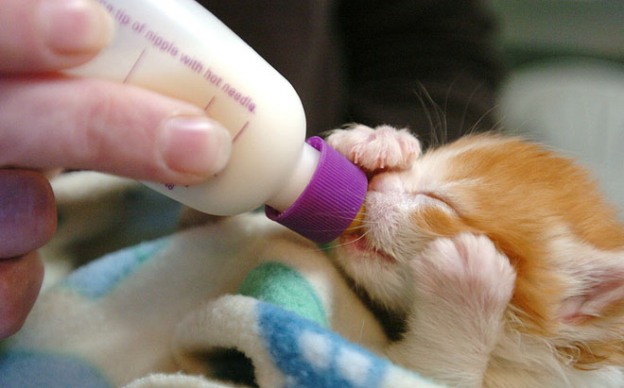
How to Care for Orphan Kittens

Dear Marie,Last night when I was taking trash out to my can, I heard some little “mews” coming from the bushes.  I went and got a flashlight and looked where the sound was coming from, and sure enough, there were two little newborn kittens in there with no mom.  They were shivering and when I touched them, they were cold.  I didn’t want to move them because I was hoping their mom would come back and she would take care of them.  But I kept checking and as far as I can tell, mom’s not coming back.  I’ve brought them inside now and I have them wrapped up in a blanket.  But I don’t know the first thing about caring for newborns.  Their eyes aren’t even open and they are only about as long as my index finger.  Any advice would be appreciated.Max, Dear Max,Sometimes, for any number of reasons, mother cats will abandon their newborns.  Lucky for these two, they had loud enough voices to get your attention and you happened to be taking out the trash at just the right time! 


 I’m going to let you know right now that raising orphan kittens is a full-time job for the next eight weeks and not all orphan kittens will survive, even with the best of care.  If you are not up for the task or the potential heartache, you may want to turn them over to a rescue organization; but quite honestly, most rescues and shelters that do fostering are overflowing with kittens, so if you are able to be “Mr. Mom” for these two little orphans, that would be great.

You need to acquire some basic supplies if you don’t have them already.  First, get a nice cardboard box that’s big enough to hold an electric heating pad.  If you don’t have a heating pad, you can get one from a drugstore; they are relatively inexpensive.  It is important that you set the pad to its lowest setting and test it to make sure it doesn’t get overly hot.  Put a towel over the pad and lay the kittens on the towel.  You’ll need several towels because they will need to be changed and laundered as necessary. While the kittens are getting warm, make a quick trip to your local pet supply store.  Purchase a couple of kitten-sized feeding bottles and powdered kitten formula.  In this same store section, you should find a special newborn kitten supplement that should be given at Day 1, Day 3, Day 5 and Day 7.  This supplement should come with a small medicine dropper that you will use to deliver the liquid directly into the kittens’ mouths.
 
Your kitten formula’s label should give you instructions on the ratio of powder to warm water.  Follow those instructions exactly.  Here’s the tricky part – a lot of newborns don’t want to take milk from a rubber nipple.  You really have to work hard to get the little guys to take to it.  But once they figure it out, it will be relatively smooth sailing.  If you have a lot of trouble though, try using a medicine dropper in the beginning.  Once the kittens begin tasting the milk, they will probably transition over to the bottle with a little more time and practice. Let each kitten have as much milk as it will take.  When they are finished, take a few sheets of toilet paper and rub each kitten gently under its tail to stimulate a bowel movement and/or urination.  Mother cats generally do this until kittens are about 3-4 weeks old, at which time kittens will begin using litter boxes. You will need to feed the kittens every two to three hours ‘round the clock.  As each day passes, they should drink more milk than what they consumed previously.  If their appetite does not grow, it may be a sign that something is wrong and that may warrant a trip to the veterinarian.

By the end of the first week, your kittens’ eyes should be open and you will notice that they are getting more active.  Be sure to handle them frequently as lots of tender loving care will help ensure their survival.  Pet them from head to tail and let them curl up on you while you are watching TV. Somewhere between 4 and 5 weeks old, you can start mixing canned kitten food with formula and offering it either with their feeding bottles (you’ll need to make bigger holes in the rubber nipples) or with a medicine dropper.  The mixture should have a thick, liquid consistency.   By this time, you should also have introduced a litter box into their room, close to their nesting box.  To encourage litter box use, put them in it immediately after each meal and rub their paws in the litter to give them the general idea.  It is amazing to watch instinct kick in and see kittens begin using their litter boxes like old pros within just a few days.
 
Over the next couple of weeks, reduce the amount of formula you mix with the kitten food until you completely eliminate the formula.  You may also start introducing dry kitten food at this point.  By eight weeks of age, the kittens can probably be placed in homes – but most likely you will have bonded to them and I suspect they’ll be yours forever.  Don’t forget to have them spayed or neutered and have their vaccinations administered.  

Good luck! 

Wednesday, January 22, 2014

Tucker Wildlife Sanctuary is Jewel of Orange County

Dear Marie,When I was in middle school, my science class took a field trip to some kind of bird refuge near Orange – at least that’s where I think it was.  I really liked it and now that I have kids myself, I’d like to take a daytrip there.  The problem is, I can’t remember exactly where it is or what it was called.  My old science teacher retired so I can’t ask him and no one at my old school seems to have any knowledge of this place.  In fact, I don’t even know if it still exists.  It’s not the Orange County Zoo.  I know where that is and I’ve been there with my family.  It was something else, something really rustic.  And it seemed to be way out in the middle of nowhere, even though we were definitely still in Orange County.  Does this ring any bells for you?
Jasmine,
Santa Ana 

Dear Jasmine,I am pretty sure your class probably visited the Tucker Wildlife Sanctuary which is located in the canyons just beyond the city of Orange.  Navigate over to Chapman Avenue and go east.  Chapman changes name to Santiago Canyon Road once you start heading into the canyons.  Turn left on Modjeska Canyon Road and take it as far as it will go.  At the end of the road, you will literally run into the Tucker Wildlife Sanctuary.  

The facility is a beautiful place to spend a day.  If you can, pick up a field guide to western bird species prior to your trip.  It’s lots of fun figuring out what all the different birds are as you are walking around and you can also bring along a check list to see how many you can mark off in a day.  You’ll be surprised!  I would recommend bringing a good pair of binoculars so that you can see the fine points in colors and patterns in feathers because some bird species differ from others by the smallest of details.   

The Tucker Wildlife Sanctuary is open from 9AM to 4PM Tuesday through Sunday, but is closed on holidays and also during periods of rain.  Before you make the trip, be sure to call just in case the sanctuary is unexpectedly closed - being out in the canyons, anything can happen.  Their number is 714-649-2760.  You can also visit them online at http://www.tuckerwildlife.org/.

Believe it or not, admission is free.  However, donations are happily accepted.  Staff and volunteers are also engaged in site improvements and maintenance, and offer a wide range of educational activities so donations are very important.  In addition to cash donations, gift cards to home improvement stores are also encouraged.

Of course, there are not just birds and butterflies.  Tucker has a few resident animal guests who delight visitors year-round, and there are also local indigenous animals that are occasionally spotted.  But I won’t spoil any surprises.  So even if your children are not up for long hikes, there is plenty to see and do for little ones. 

Tucker is owned by the College of Natural Sciences and Mathematics of California State University, Fullerton.  It sits on twelve acres adjacent to the Cleveland National Forest.  In addition to a museum, there are also picnic areas, hiking trails, bird observation areas, a gift shop and restrooms.  And your kids will especially enjoy the Children’s Garden where there are native plants that they will be allowed to touch and smell.  During certain months, the Children’s Garden is filled with butterflies and it is quite an amazing site. 

The sanctuary is a special place with a marvelous history.  It was the dream-retirement home in 1926 to Ben and Dorothy May Tucker who loved the local wildlife and placed home-made, never-before-seen hummingbird feeders around their cabin.  Their feeder design became the standard for modern hummingbird stations.  The Tuckers willed their property to the California Audubon Society who took over the care of the sanctuary and opened it to the public in 1939.  During World War II, when sugar was rationed, the sanctuary had special permission to continue obtaining and using sugar in the Hummingbird feeders.   In 1968, the Society gave the property to California State University, Fullerton on the condition that it is maintained as a wildlife sanctuary for the benefit of the public and the animals – the arrangement has allowed many students from the department of natural sciences to have the opportunity to conduct field research and observe wildlife in a natural setting.  And just like you, students past and present from K-12 programs all over Southern California have taken or will take very memorable field trips to the sanctuary. 
I hope you and your children spend a wonderful day exploring and discovering nature.  Have fun.